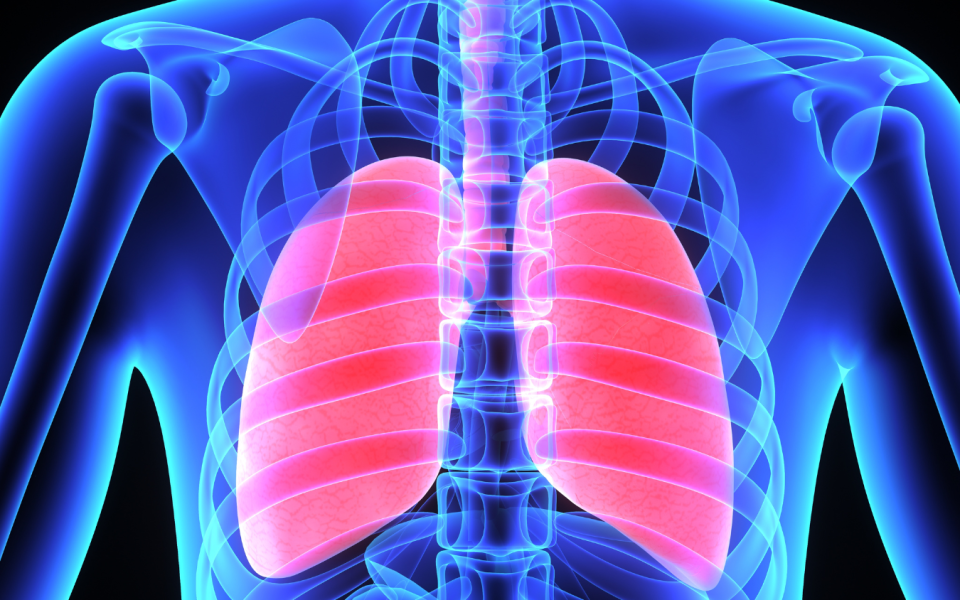
Your respiratory system
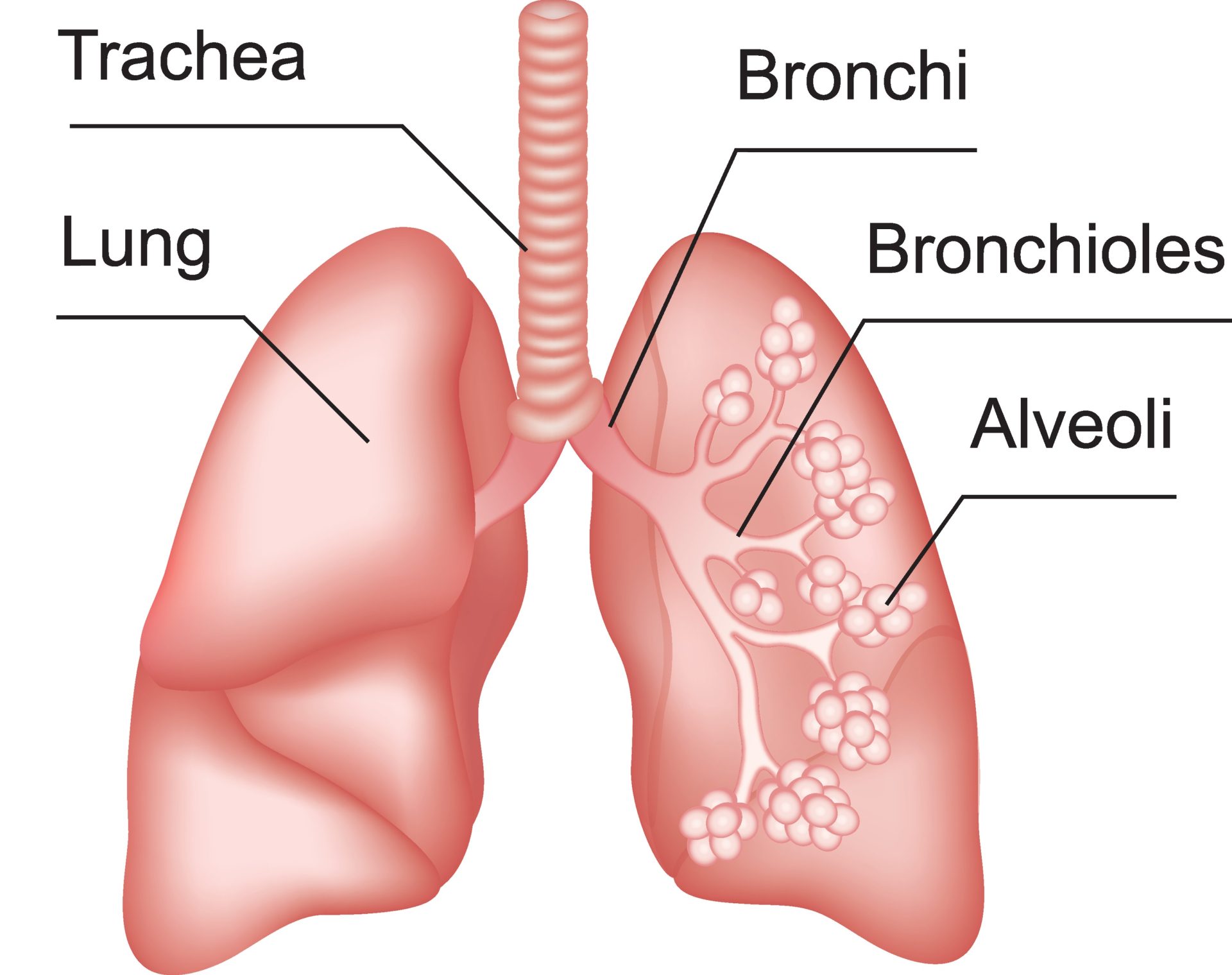
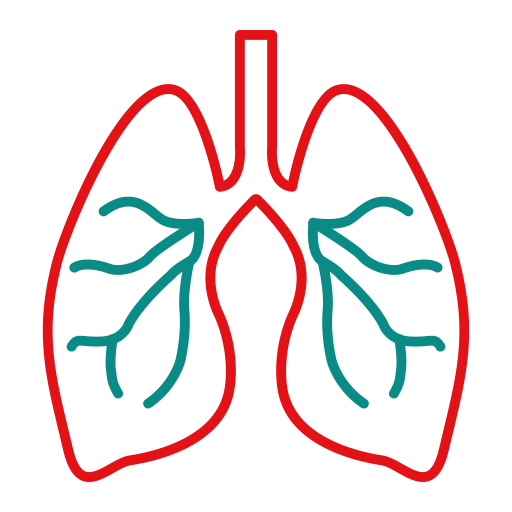
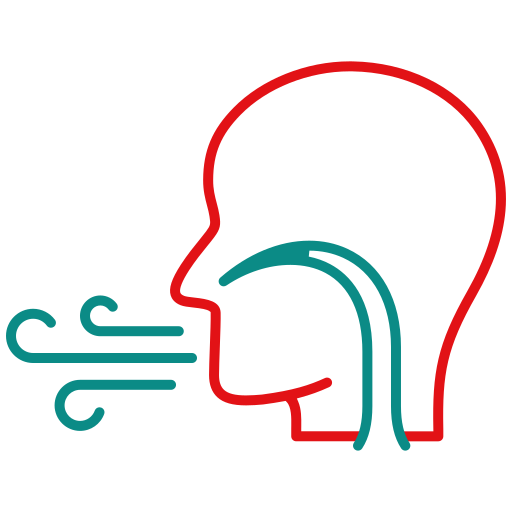
Air enters your respiratory system through your nose and mouth. It then travels down through your trachea (windpipe).
The trachea divides into two tubes called bronchi; one bronchi enters each lung. The bronchi divide into smaller bronchi. The smallest bronchi divide into even smaller tubes or branches, called bronchioles.
At the end of the bronchioles are bunches of alveoli (plural of alveolus). Alveoli are tiny air sacs that are surrounded by tiny capillaries. These blood vessels allow gas exchange to occur between your blood and the air you breathe.
How we breathe
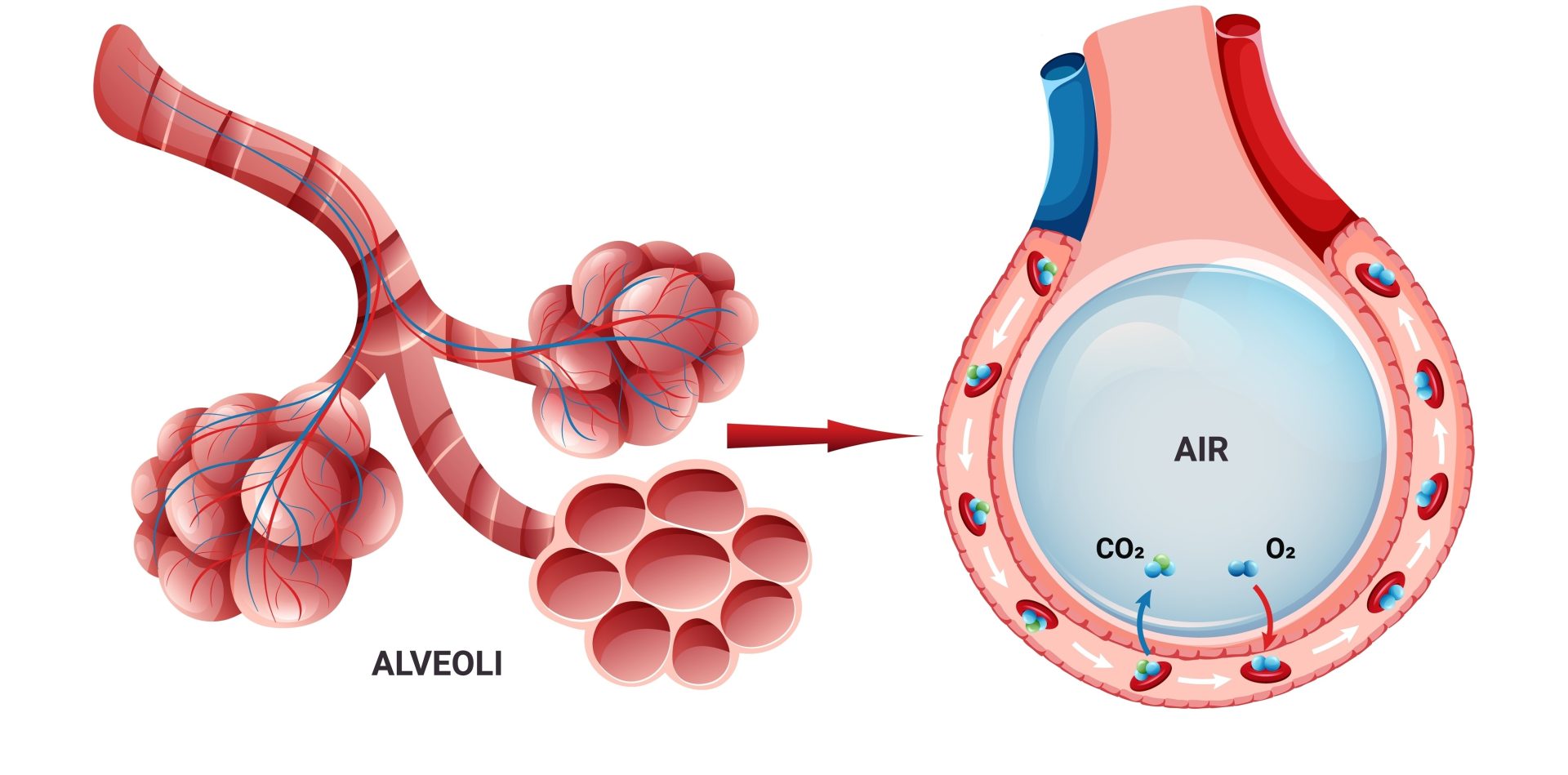
All cells in our body need oxygen, but we can’t make our own. We need to get our oxygen from the air around us.
The air we inhale travels through the trachea, the bronchi and bronchioles to reach the alveoli. The alveoli is where oxygen is transferred from the inhaled air to the blood for circulation.
Carbon dioxide that our body doesn’t need is transferred from the blood to alveoli where it is ready to be exhaled. When you breathe out, air with carbon dioxide leaves your lungs through your bronchial tubes, up through the trachea and out through your mouth and nose.
The heart and lungs work in harmony in this process to circulate oxygenated blood to muscles, vital organs and all cells so that they can properly function.
Muscles that help you breathe
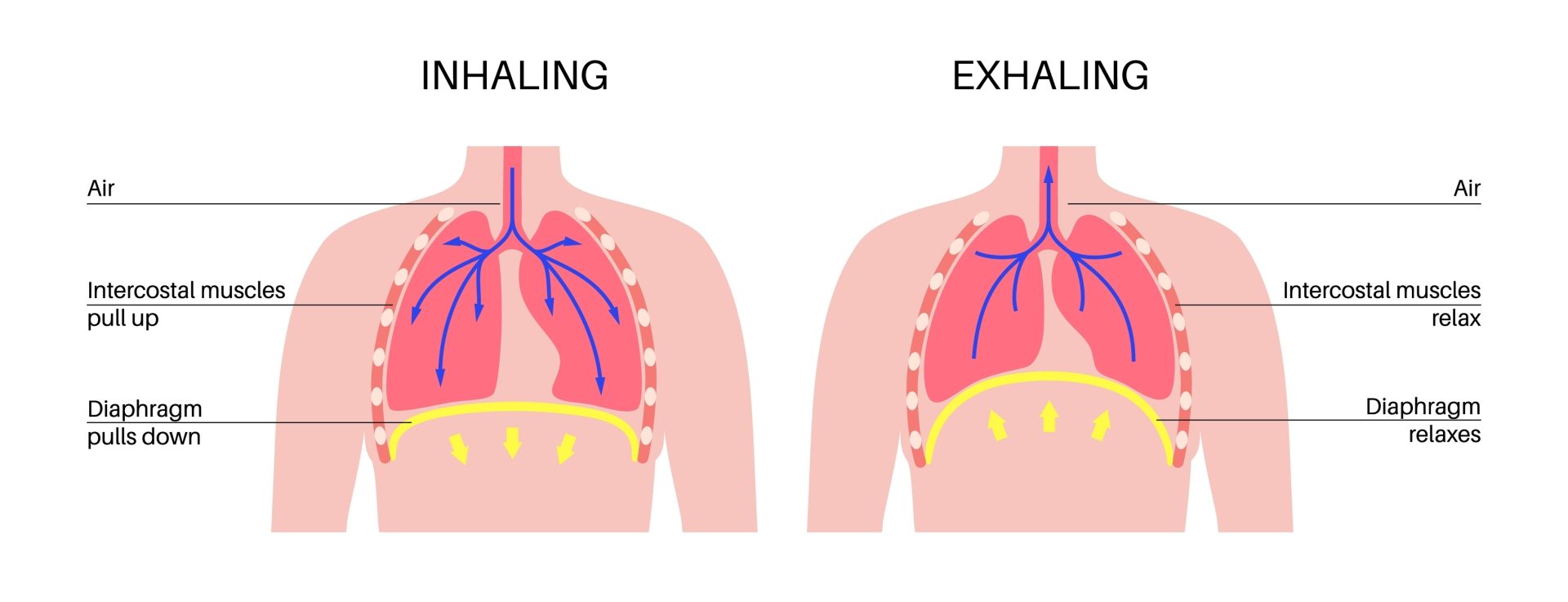
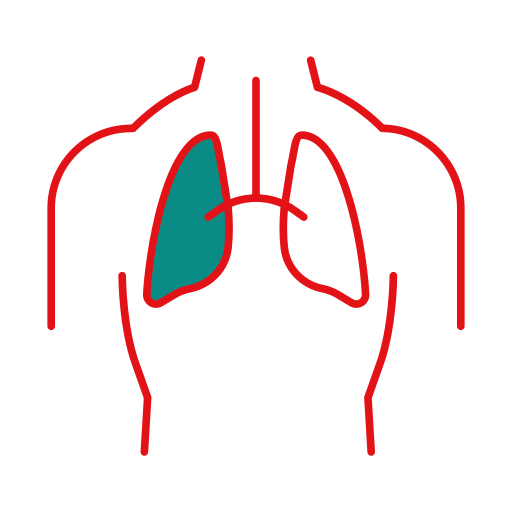
Your diaphragm is the primary muscle of breathing. It is located below your lungs. It separates the chest cavity and the abdominal cavity.
When the diaphragm contracts, it flattens downwards to increase the size of the chest cavity, giving more room for the lungs to expand. When this happens, air is drawn into the lungs. When the diaphragm relaxes, it curves upwards making a smaller space in the chest cavity, pushing air out of the lungs.
Other muscles also help you to breathe. The intercostal muscles between the ribs, the scalene and sternocleidomastoid muscles in the neck and chest and your abdominal muscles all help expand and contract your chest.
Fun facts about your lungs