
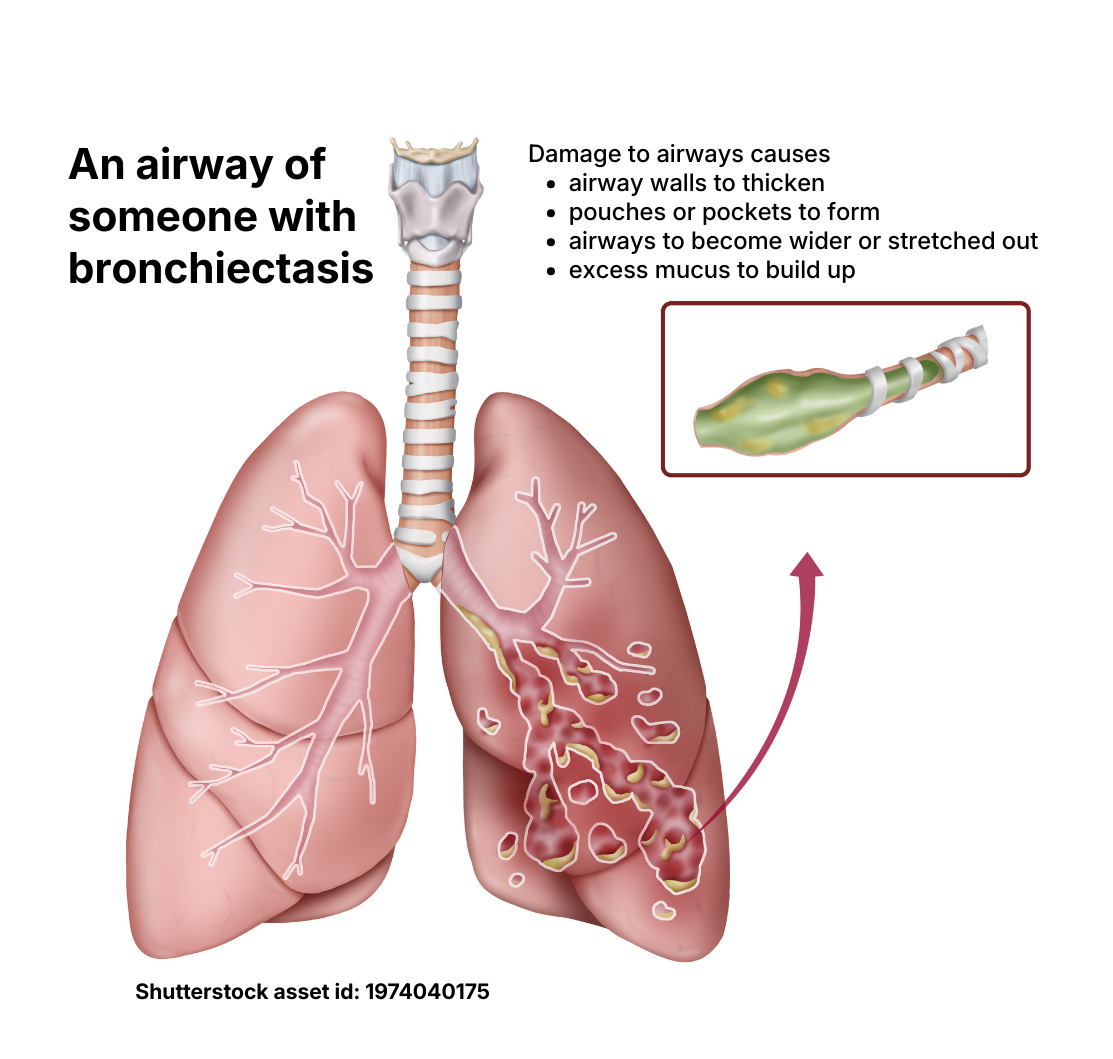
What is bronchiectasis?
Bronchiectasis is an obstructive lung disease that results from damage to the airways. This damage can be caused by different things, like infections or other lung conditions.
Damage to the airway causes the airway walls to get thicker and the airways to get wider. This makes it harder to clear mucus from the airways, which causes the mucus to build up.
Bronchiectasis creates a vicious cycle: when mucus builds up in the airways, it can trap bacteria so that lung infections occur more often and more damage is done to the airways.
Causes of bronchiectasis
Bronchiectasis can be caused by something that damages the airways, such as an infection like pneumonia, whooping cough or tuberculosis, another lung condition like asthma or COPD or by food or liquid being inhaled into the lungs.
The damage to the airways makes it harder to clear mucus, which causes the it to build up. The airways can widen and stretch out and form small pockets that trap bacteria and mucus.
Bronchiectasis can also be caused by inherited conditions like ciliary dyskinesia that affects the cilia inside the airways and makes it harder to clear mucus.
Having an immunodeficiency can contribute to the development of bronchiectasis because repeated and persistent infections cause inflammation in the airways.
If you have a lung infection, it’s important to get it treated right away. Early treatment means there is less chance for long-term lung damage, such as developing bronchiectasis.
Symptoms of bronchiectasis
Bronchiectasis may look different in different people. The most common symptom of bronchiectasis is a chronic cough (a cough that doesn’t go away) that is productive, meaning coughing brings up mucous or phlegm. Bronchiectasis causes people to cough up large amounts of mucus. The mucus is sometimes yellow or green and it sometimes smells bad.
Other symptoms of bronchiectasis include:
- feeling short of breath
- chest pain
- wheezing
- coughing up blood
- fever
- weakness
- weight loss without trying
Treating and managing bronchiectasis
With proper management and treatment, most people with bronchiectasis can live relatively healthy lives.
Bronchiectasis can’t be cured; the goals of treating bronchiectasis are to prevent lung infections, to remove excess mucus and to prevent flare-ups (exacerbations). Treatment also focuses on the underlying cause of the damage to the airways, if known.
The main treatments for bronchiectasis are medications and chest physical therapy. Sometimes people with localized bronchiectasis (bronchiectasis in one area of the lung) can have that portion of their lung removed. A lung transplant is also an option in more severe cases.
Chest physical therapy
Chest physical therapy is a way of loosening the mucus in the chest. Doing chest physiotherapy as directed can reduce cough and mucus buildup, reducing the risk of lung infections.
Examples of chest physiotherapy techniques include postural drainage, specific breathing or coughing techniques, percussion and the use of positive expiratory pressure devices.
Postural drainage uses gravity and body position to help drain mucus away from the lungs. People sit or lie down in different positions depending on where in the lungs the mucus is building up.
Percussion means clapping your chest and back in specific spots to loosen the mucus. It is typically done with a cupped hand. It may be easier for someone else to do the tapping for you. You can also purchase small electronic machines that can percuss the chest (sometimes called “palm percussors”). Vest percussive therapy, or high-frequency chest wall oscillation, involves wearing an inflatable vest attached to an air pulse generator. The high-frequency oscillations help loosen the mucus.
A positive expiratory pressure (PEP) device is a small, hand-held device. When you exhale into the device, it creates resistance, or pressure, against your breath. This helps open the airways and loosen the mucus in your lungs so that it can move.
Medications for bronchiectasis
Bronchiectasis creates a vicious cycle: infections damage the airways, mucus builds up in the airways and traps bacteria so that lung infections occur more often and more damage is done to the airways. Antibiotics are used to clear up repeated lung infections.
Particularly if you also have asthma or COPD, you may be prescribed a bronchodilator inhaler. These medications relax the muscles around the airways to make breathing easier. Inhaled corticosteroids may be given if you have bronchiectasis that is caused by swelling in your airway.
Mucolytics are medicines designed to thin or break down the mucus in the lungs, making it easier to cough out. Mucus thinners thin your mucus to make it easier to cough it up, and expectorants help bring up the mucus.
Pulmonary rehab
Your doctor may recommend pulmonary rehabilitation to help you strengthen your lungs and make breathing easier.
We offer BreatheSTRONG, an eight-week, free program that can be done from the comfort of home. It includes progressive exercise, education and tools and resources to help you manage your condition.
Preventing flare-ups
People with bronchiectasis can experience worsening symptoms during flare-ups. If you have bronchiectasis, you can try to stay healthy to prevent flare-ups by:
- not smoking and avoiding second-hand smoke,
- eating a balanced diet,
- staying hydrated to help keep the mucus in your lungs moist,
- getting vaccinated as recommended by your healthcare provider (flu shot, pneumococcal pneumonia shot, ensuring you’re vaccinated against measles, rubella and pertussis), and
- washing your hands properly to avoid infections.